Conservation through art

Who we are:
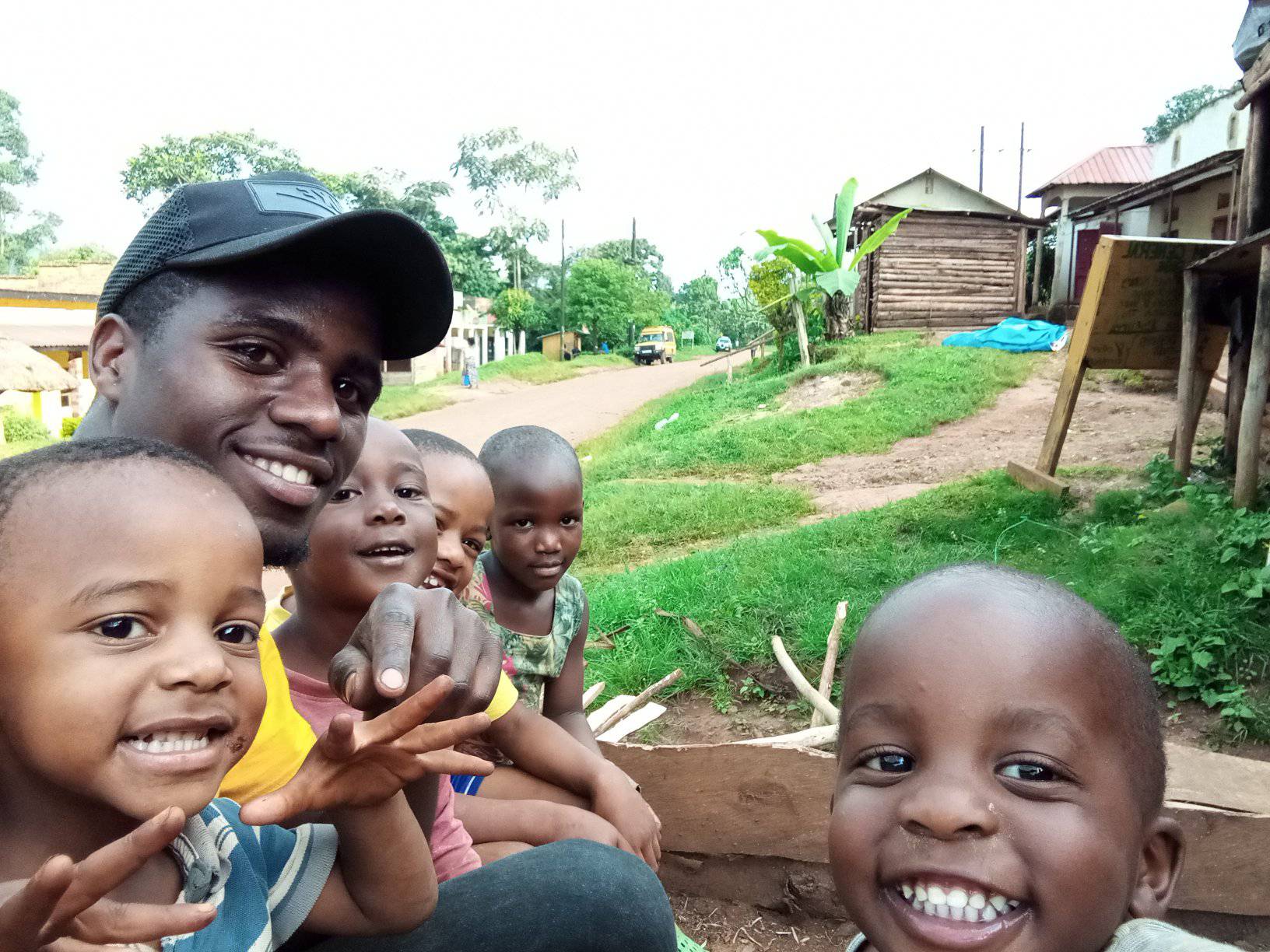
Bwindi Local Wood Carvers Association is a non-profit organization founded in 2022 by local woodcarvers. Our mission is to promote technical education among local artists and children living around Bwindi. The association has two membership categories: children aged 3–14 and adults above 15 years.
Communities living on the edge of Bwindi National Park often depend on subsistence farming or the illegal extraction of resources from the protected area due to a lack of alternative employment. This drives human-wildlife conflict and puts pressure on natural resources. Although there is high demand for locally made products, artisans lack the technical skills, equipment, and training needed to produce high-quality goods for sale.
By transforming local skills into high quality, marketable products, the association provides alternative sources of income, reduces reliance on illegal activities, and promotes community-based conservation. We use woodcarving as a tool to promote sustainable conservation of mountain gorillas and improve community livelihoods.
Today, wildlife resources face intense pressure, and there is an urgent need to advocate for coexistence — especially for mountain gorillas, which are threatened with global extinction. Thus, the Association endeavors not only to create art for sale but also to promote advocacy for human-wildlife coexistence. Additionally, we focus on building networks among artisans, enabling them to collaborate and share resources. This will further strengthen their economic position around Bwindi.
As Bwindi Local Wood Carvers Association, we believe we can contribute to the welfare of local people while enabling the protection of mountain gorillas, and other wildlife species.
Location of our workshop:
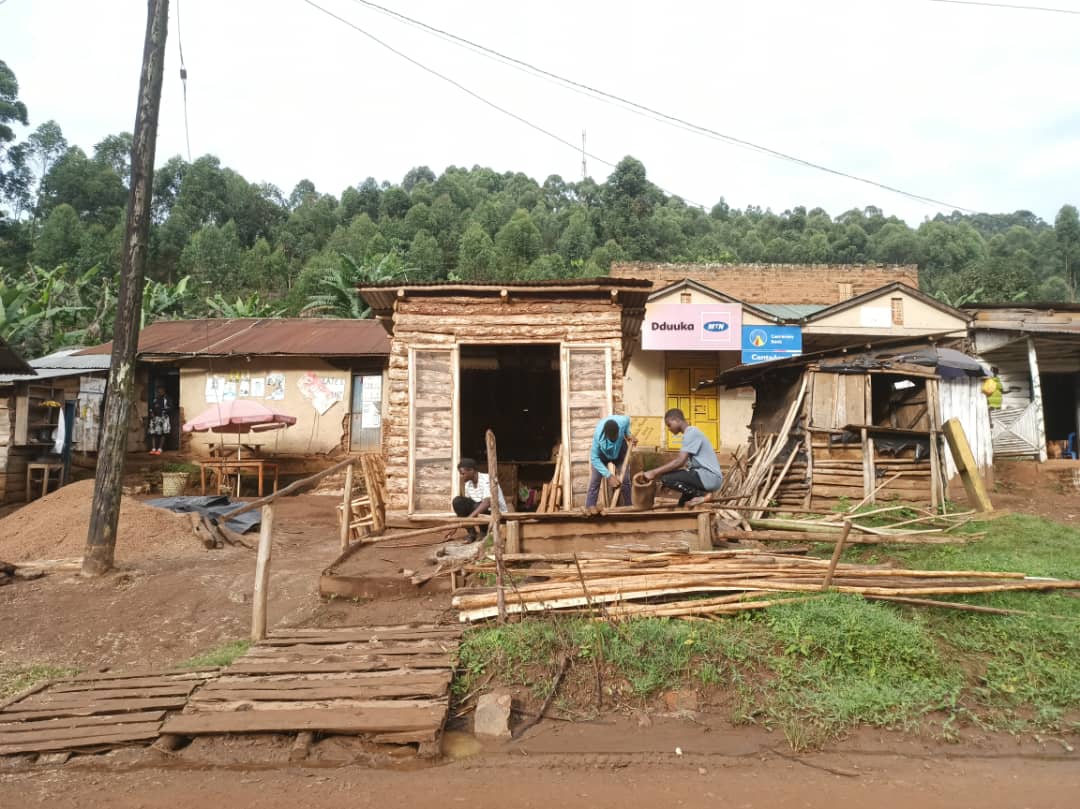
We are located in the Bwindi southern ward of Buhoma, Kanungu District, next to the Bwindi Impenetrable Forest. We are on the main road, approximately 100 meters before the entrance of the park, opposite of Bwindi bar.
History:
The group was started by Rutaro Onesmus. His teacher is Augustine Muhangi (also known as Rasta). Click here for more details on the history of Rasta and Onesmus.
What we do/Our activities:
-
Woodcarving and furniture:
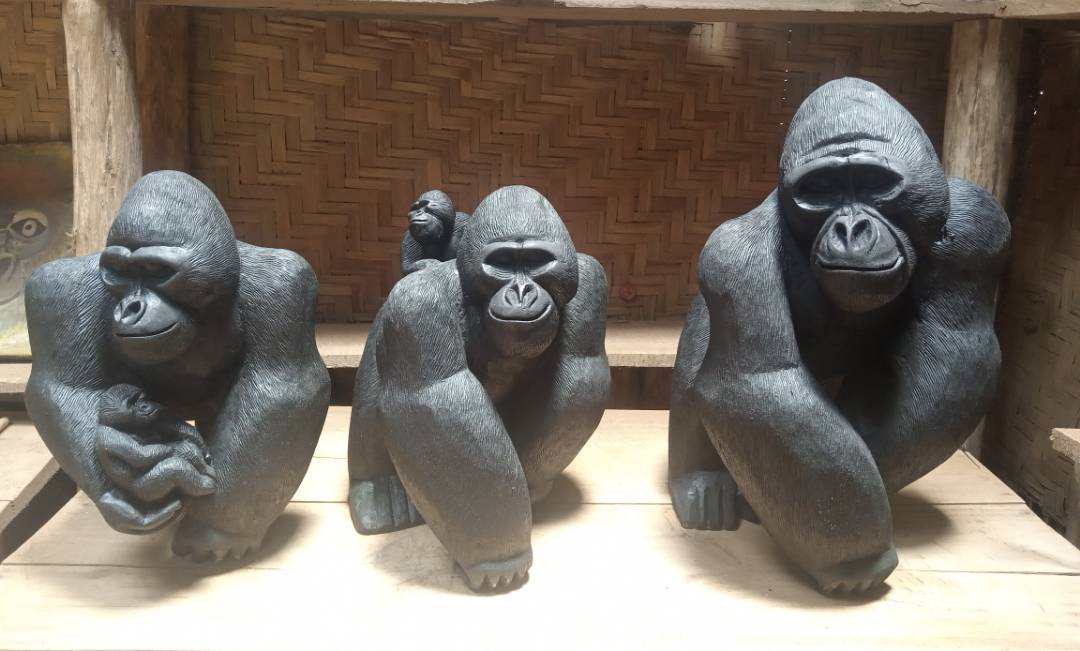
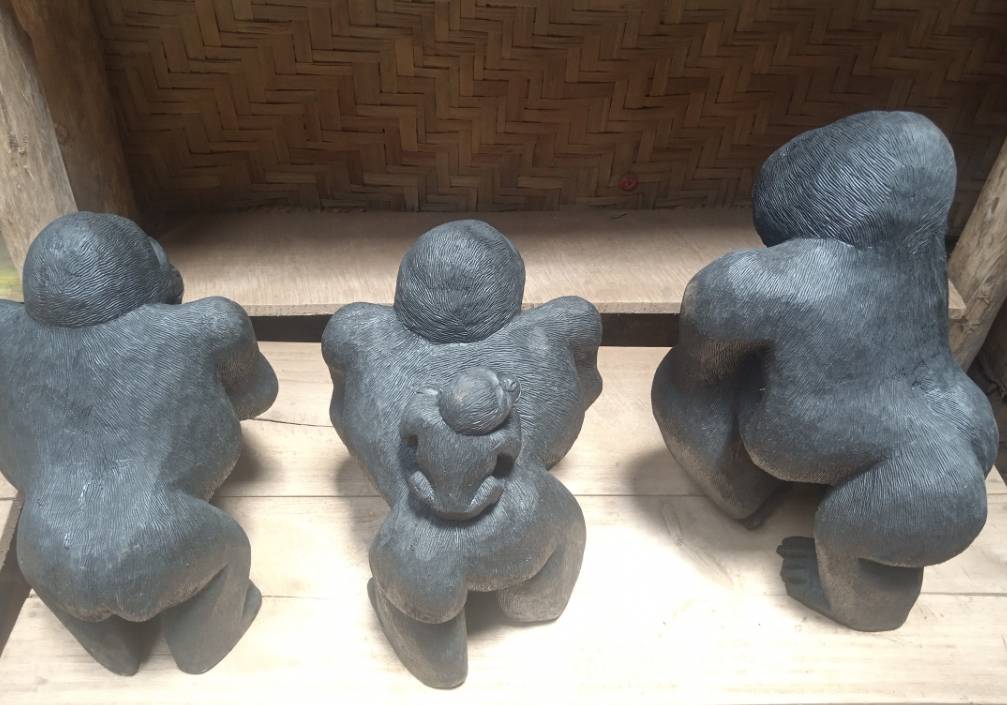
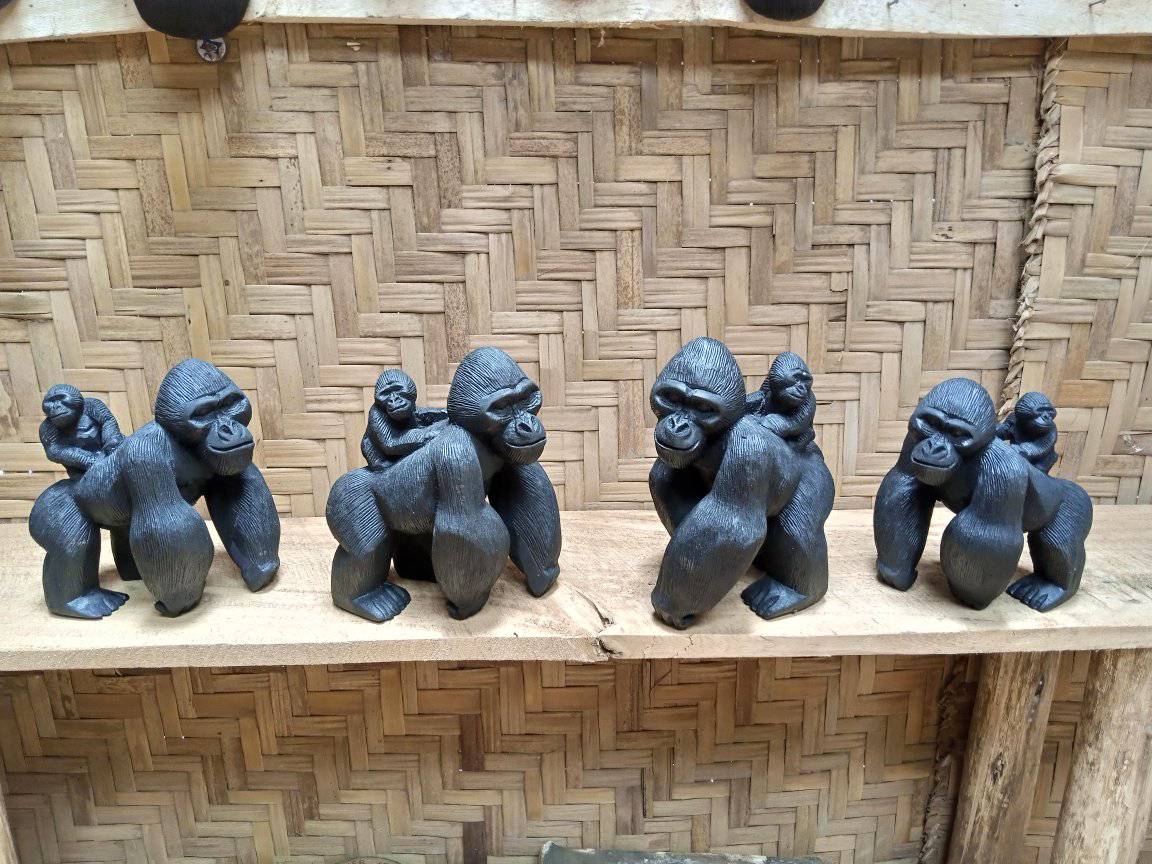
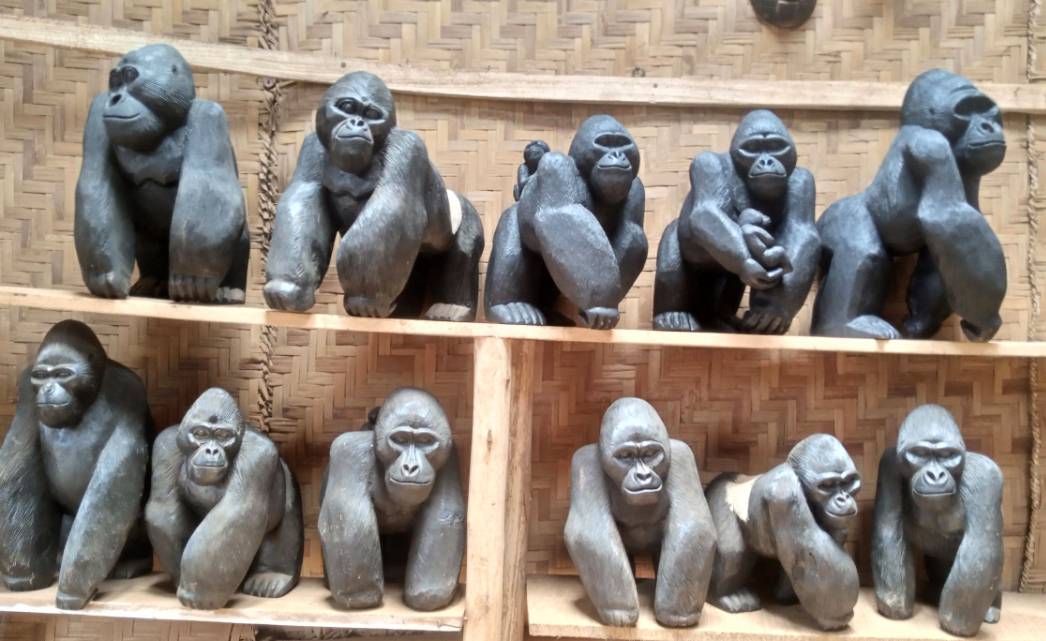
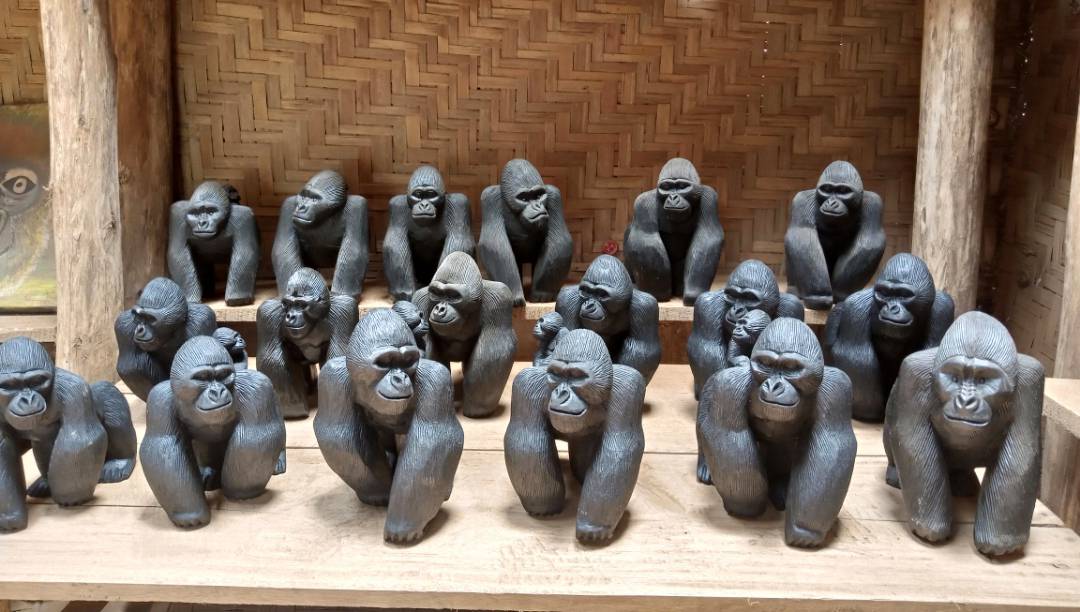
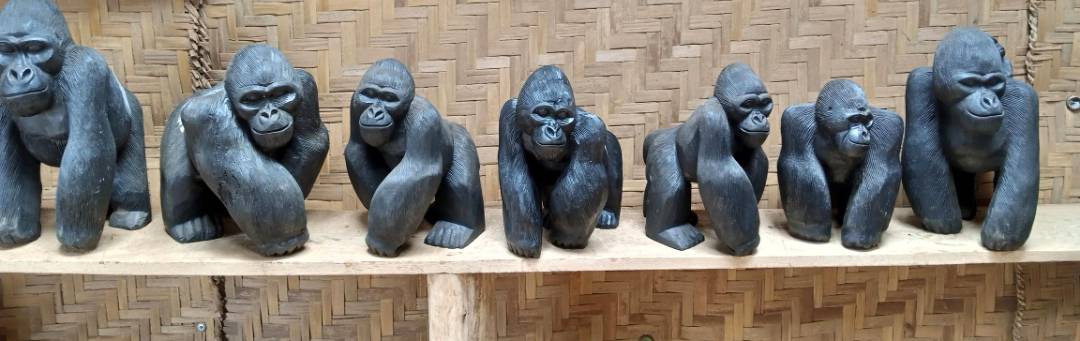
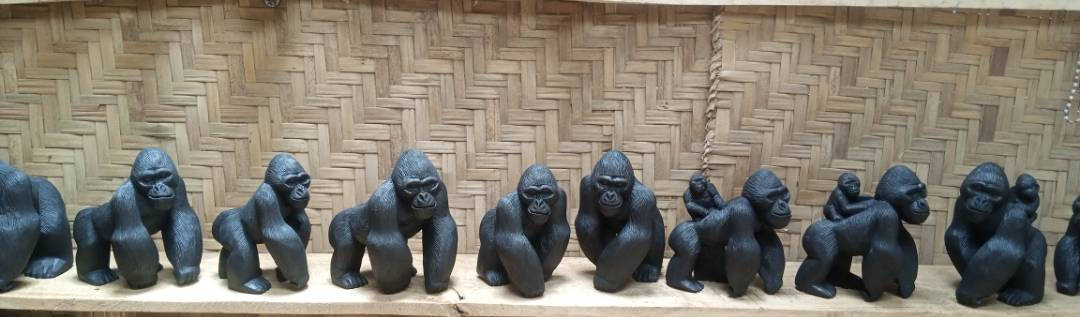
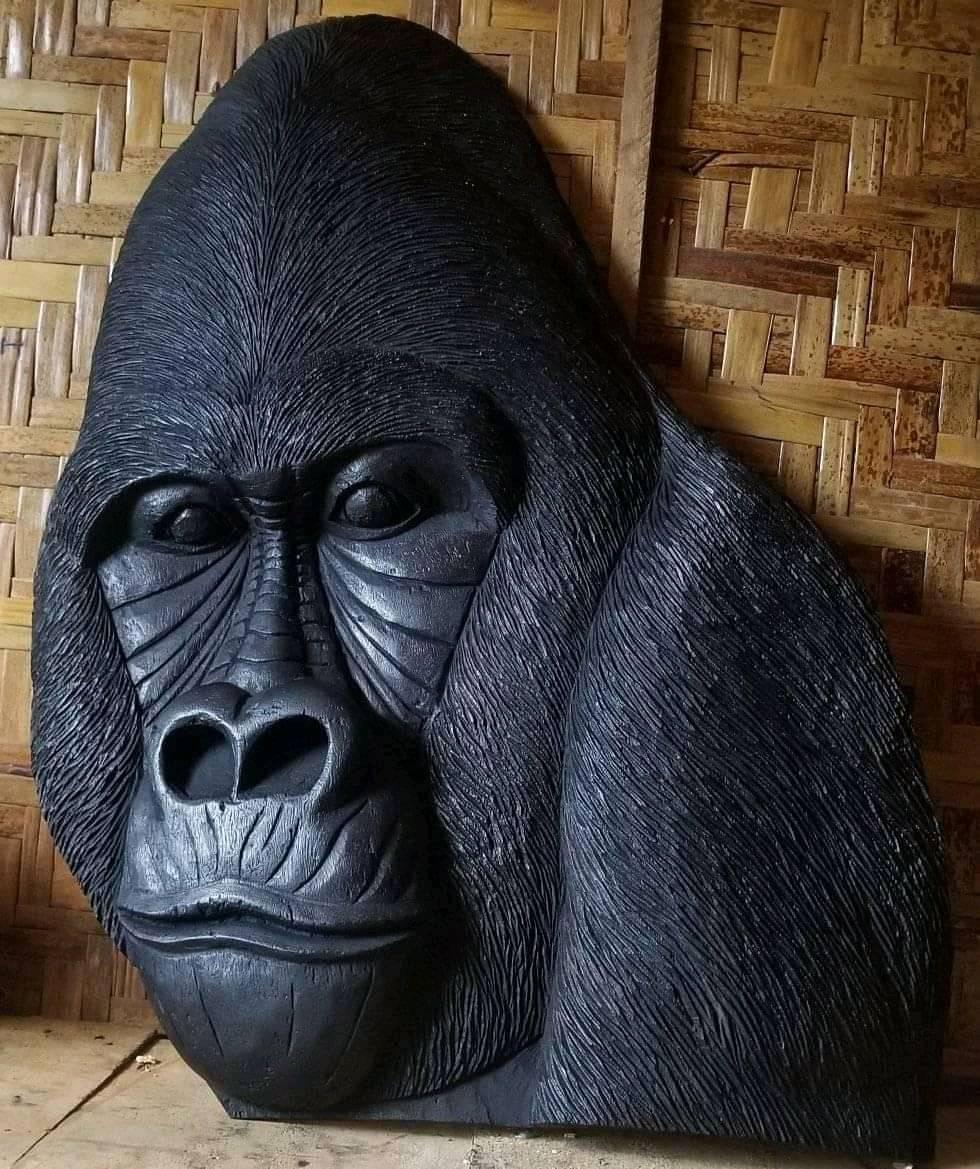
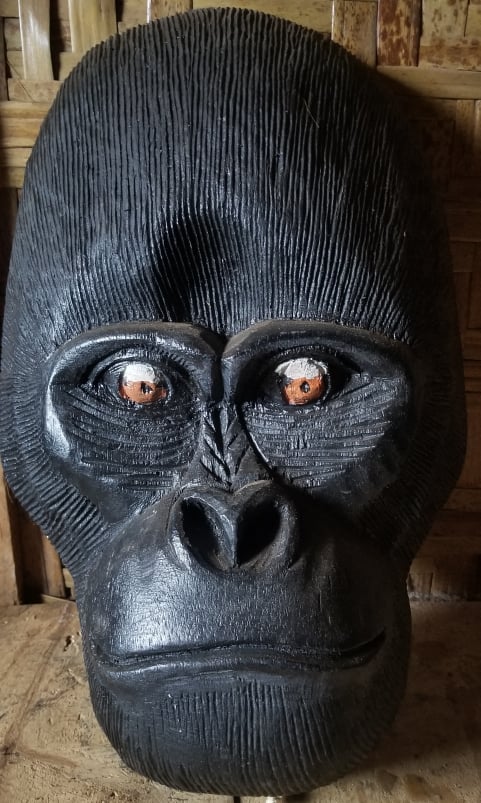
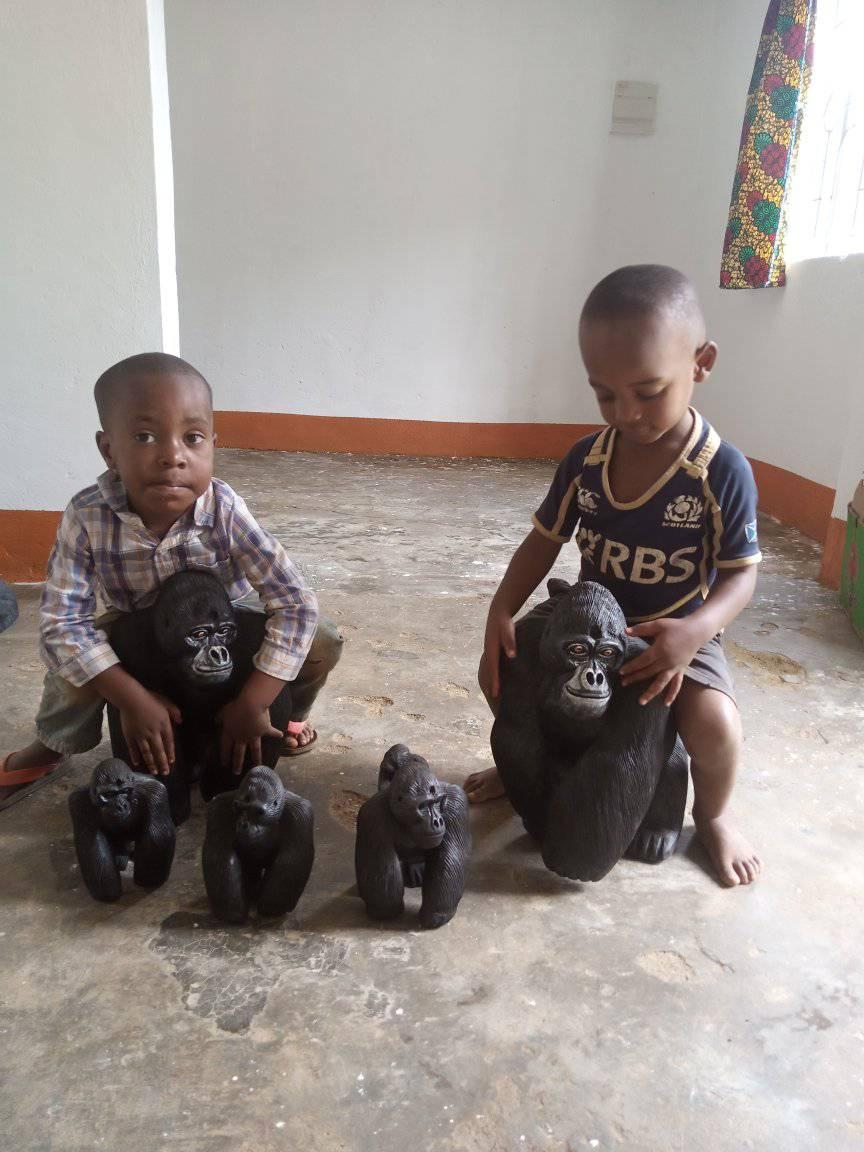
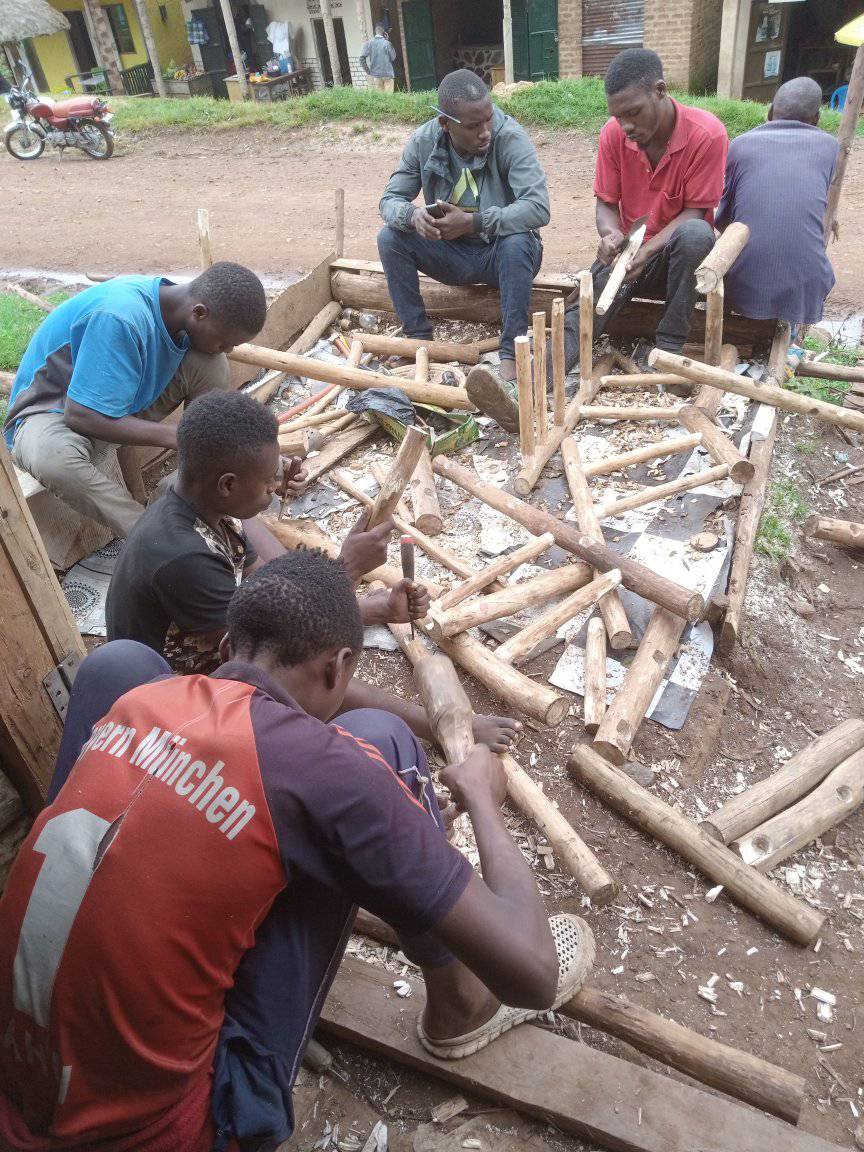
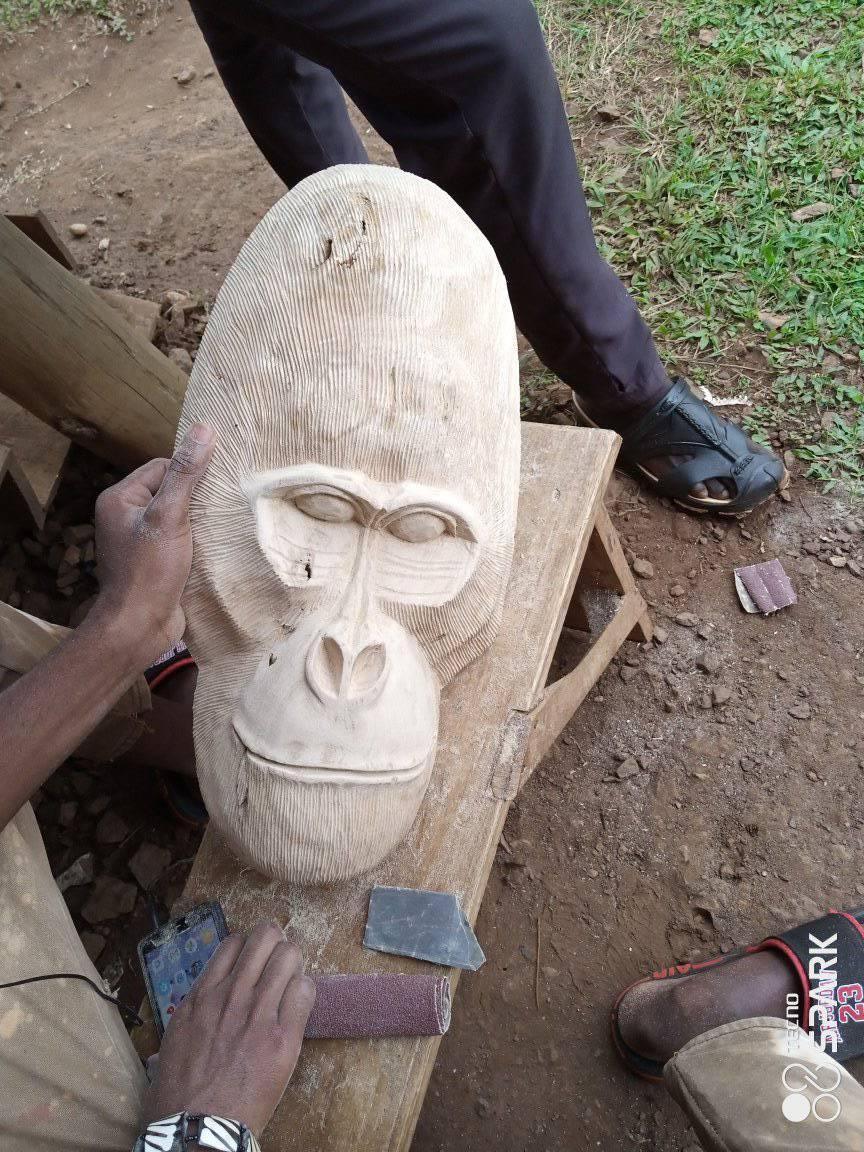
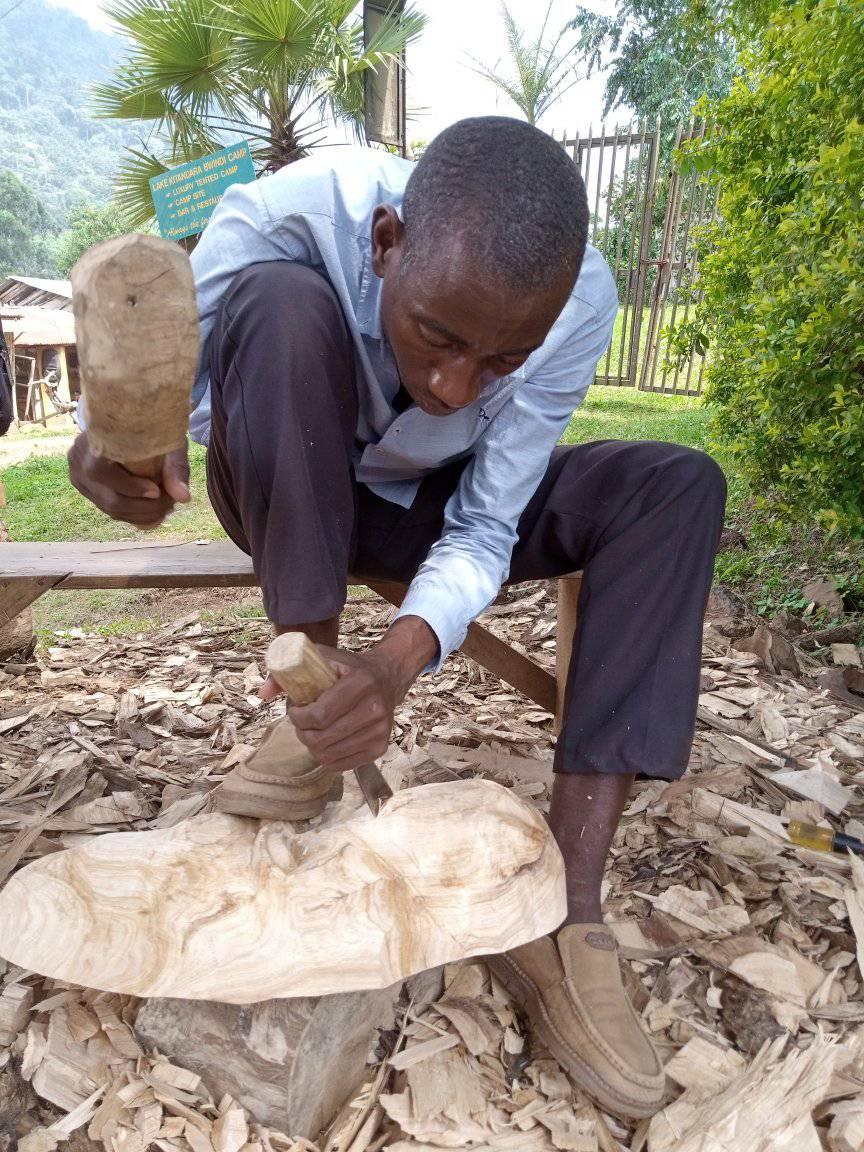
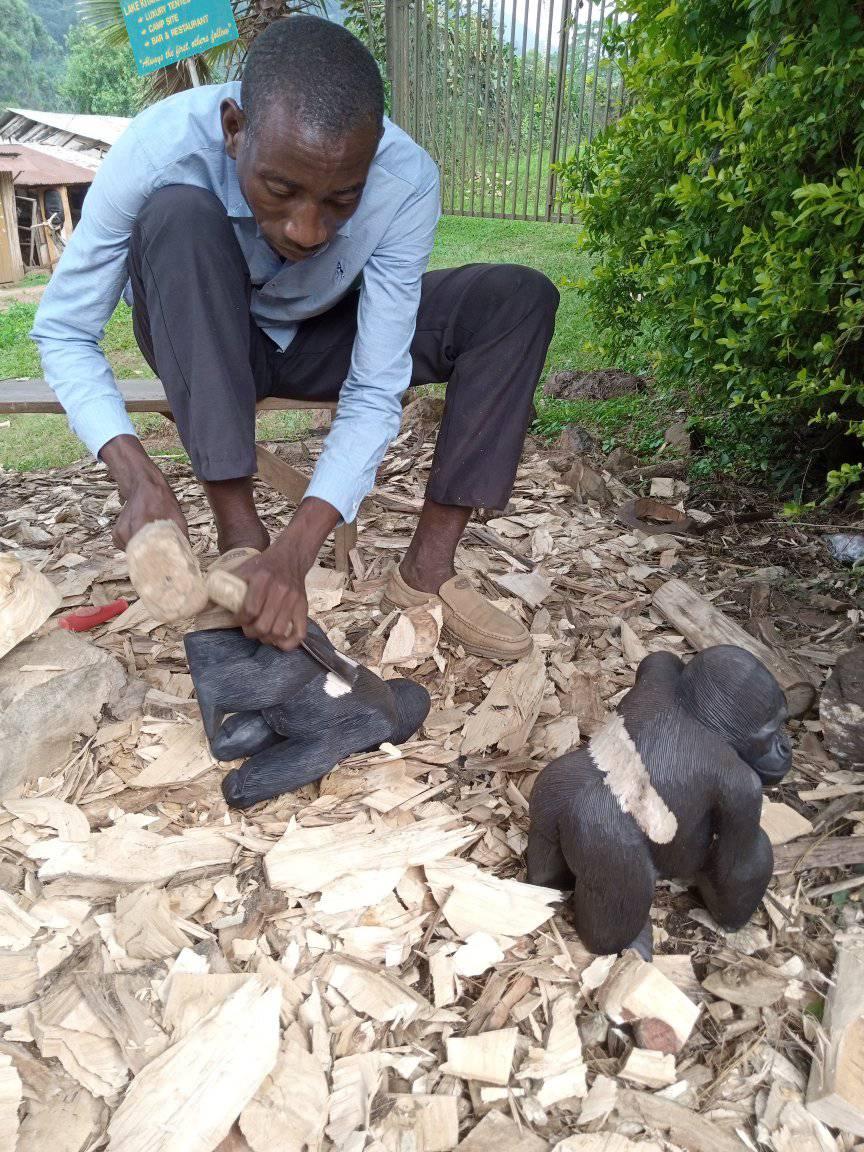
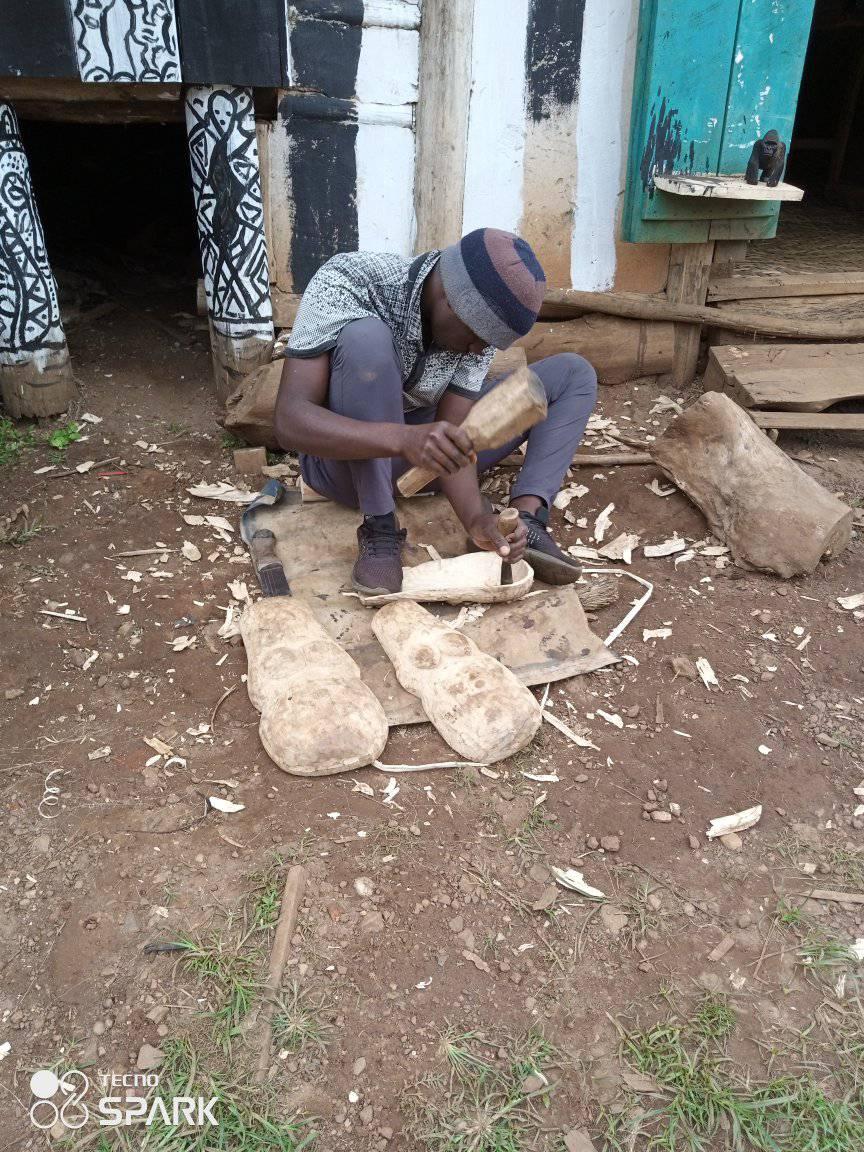
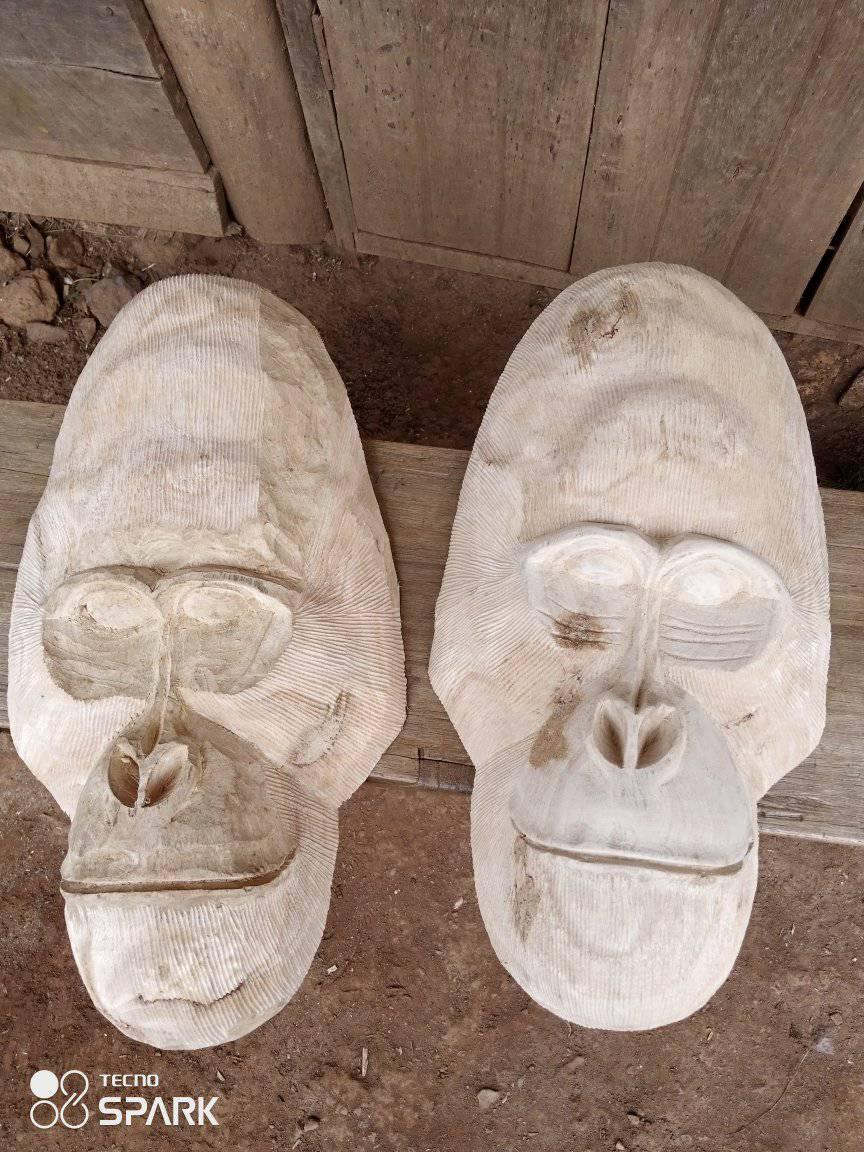
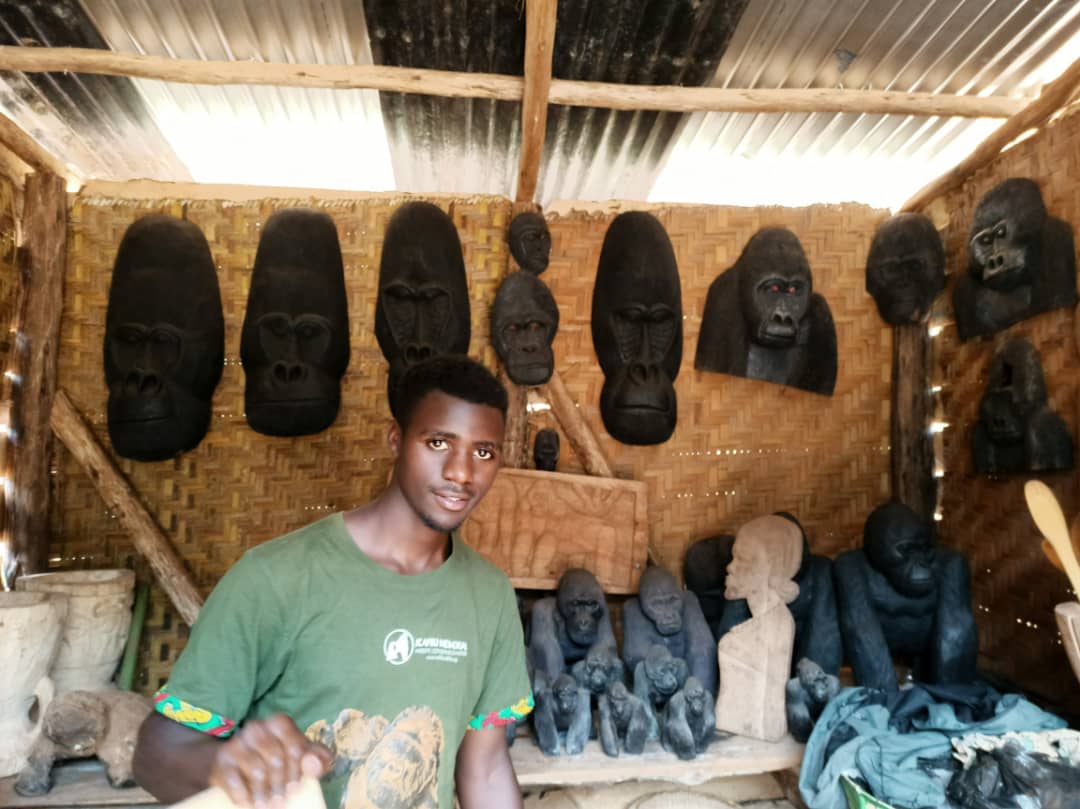
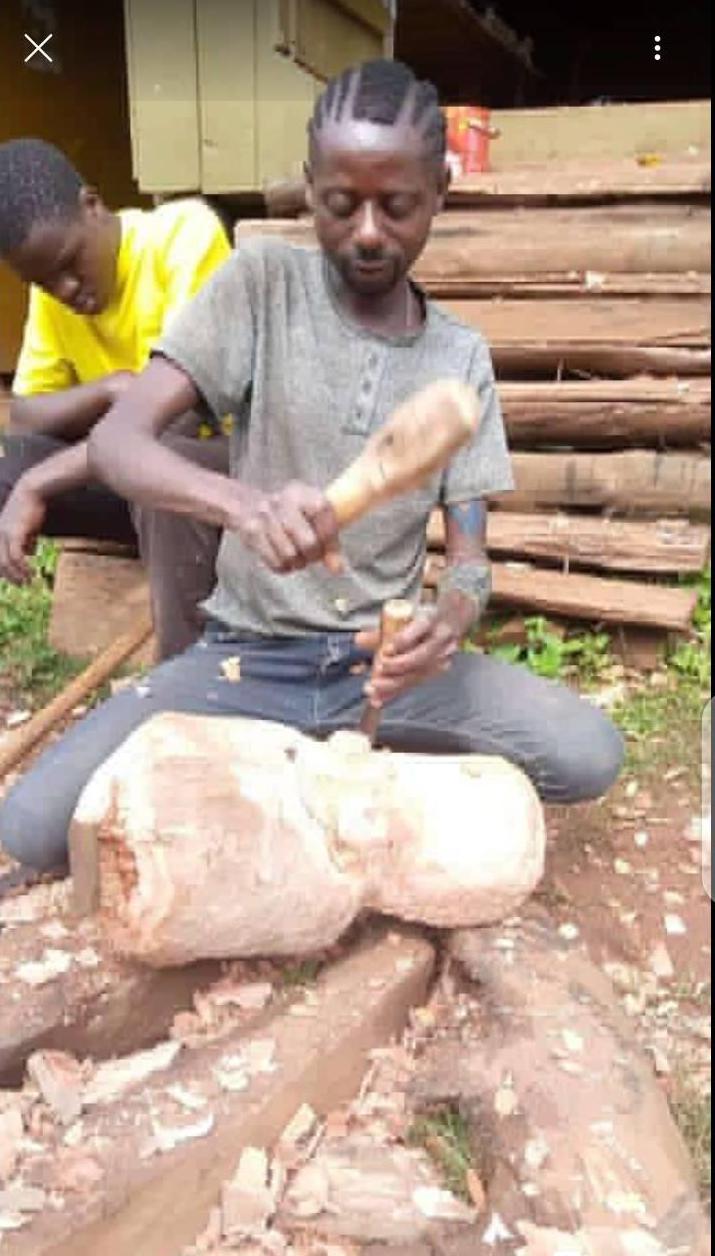
- Woodcarving: Adult members carve wood into different animals including gorilla statues, masks, walking sticks, key rings, earrings, and fridge magnets, plus other animals like elephants, lions, and buffaloes, among others. If you like us to carve something, please let us know.
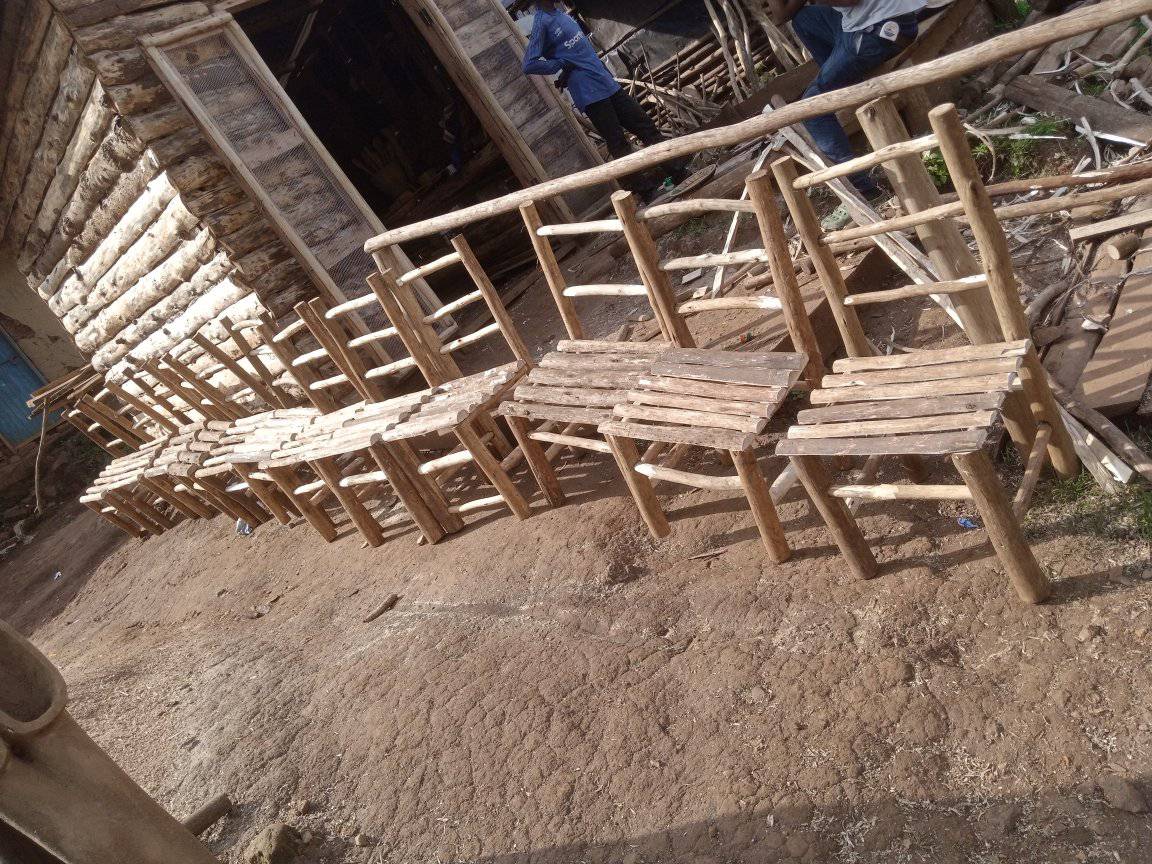
- Furniture: We make a variety of furniture, including beds and chairs that reflect both the image of our forest and our cultural heritage with authentic African handmade furniture.
- Types of wood: Please note: we do not cut trees from Bwindi Impenetrable National Park (BINP), as we want to support the preservation of gorilla habitat. Instead, we cut trees from family-owned land. We use Mahogany, Markhamia lutea, Albizia coriaria, Pterocarpus soyauxii, Ochroma pyramidale (Balsa wood). All are hardwood trees that can grow up to 50 meters high, especially in the tropical climate of Bwindi. The wood is carefully sourced through sustainable practices of afforestation and selective cutting to promote forest health. For every tree we cut, 2–5 trees are planted.
- Art Materials and Tools
- Axe and machete (“panga”) for chopping the wood
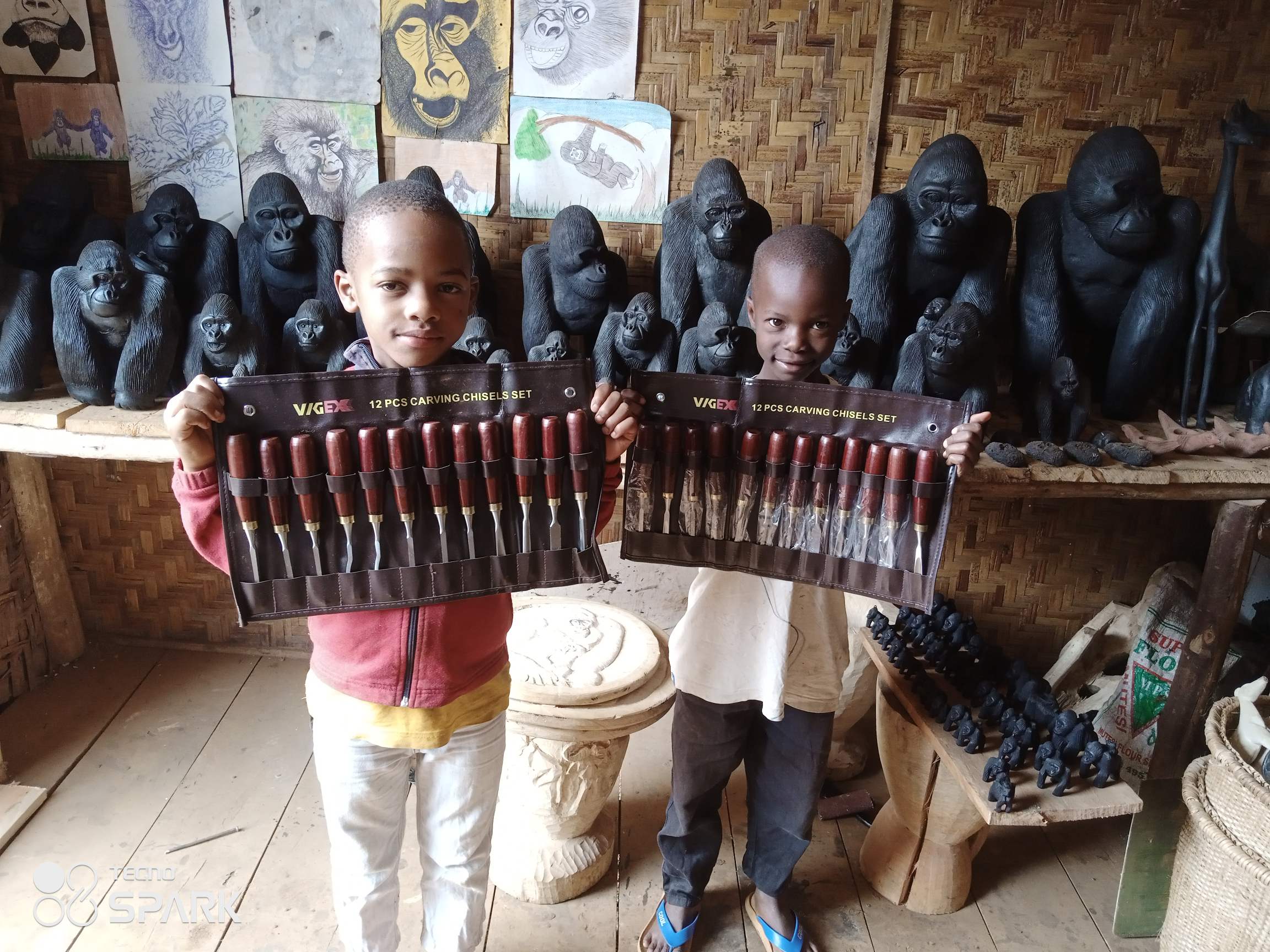
- Carving tools: Different sets of chisels in various sizes and shapes — U-shaped, V-shaped, and flat chisels —for detailed carving. hand-based sand papers to smoothen the surface of the carving.
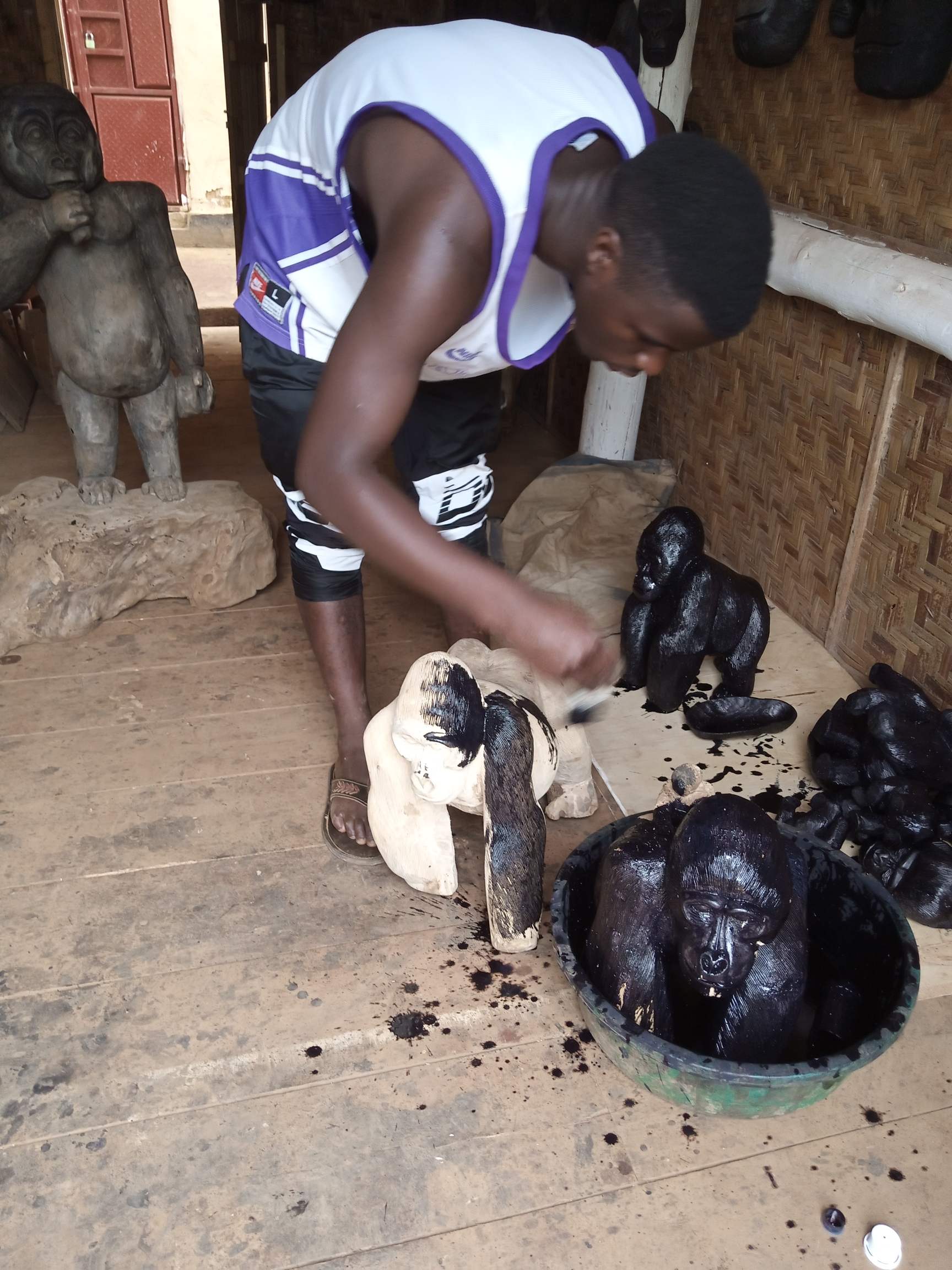
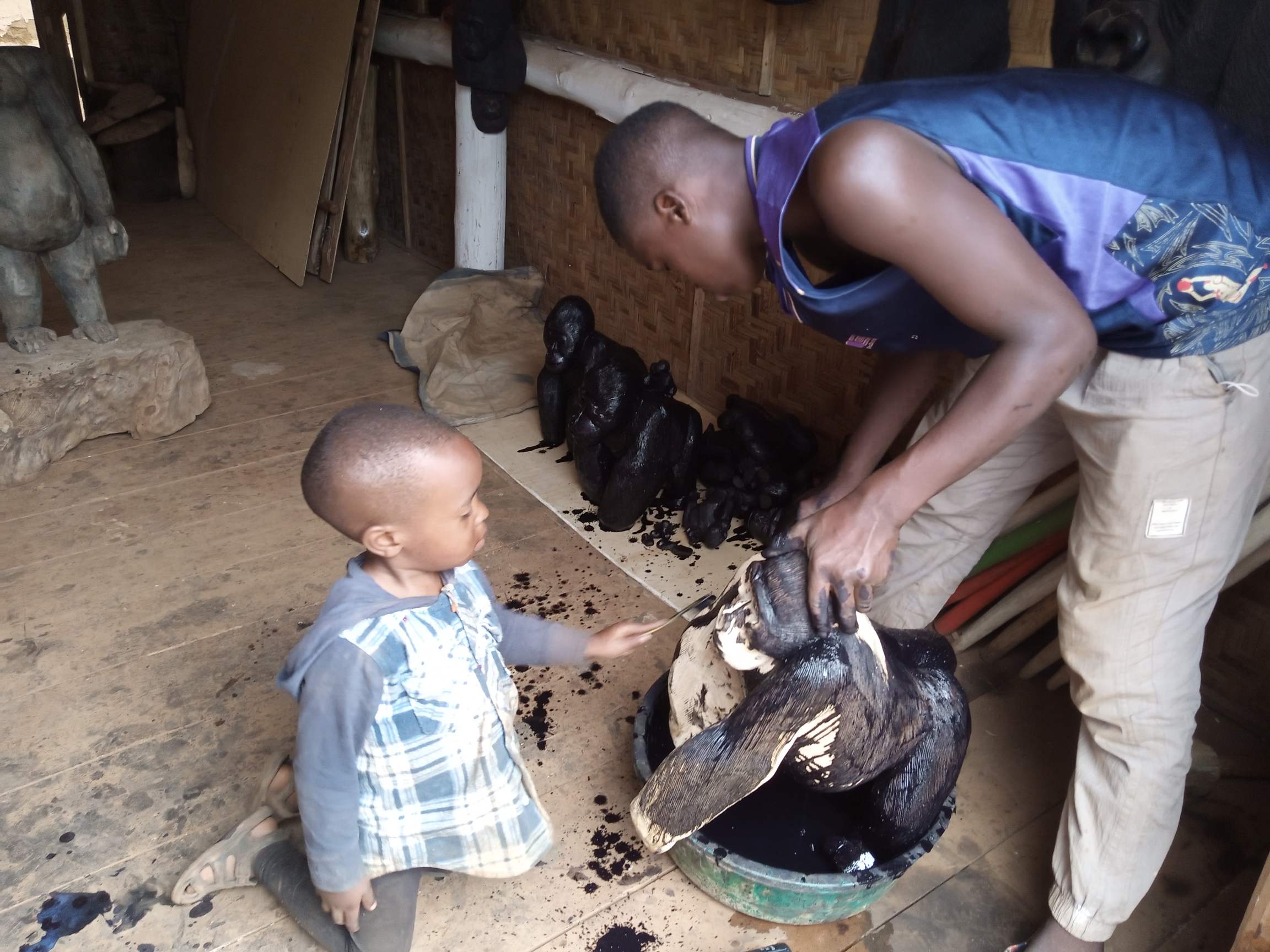
- We use black leather dye to turn the wood color from natural colors to black, as well as acting as a preservative so woodeaters bugs don’t eat it. Then finally we apply leather shoe cream to polish the carvings to give them the shiny feel and touch, so that when you touch it, the dye won’t smudge to your hands.
- Drawing and painting: Paints, brushes, canvas, pencils, pens, drawing boards, drawing papers, among others. Black leather dye, shoe polish, sandpaper, etc.
- Electrical equipment: Grinders, planers, drills, circular saws, among others for making furniture and finish.
-
Environmental & Community Conservation work
- Waste Management and Recycling: We collect garbage by picking up plastic bottles, polythene bags, and other non-biodegradable products inside Bwindi Forest and in the communities surrounding the forest.
- Planting Indigenous Trees: We plant indigenous trees to provide raw materials for woodcarving. This reduces pressure on the forest by stopping local people from harvesting natural resources directly from the forest. This practice enables locals to utilize trees sustainably: “Cut one, plant two or more” within the community.
- Creating Awareness: We run community outreach programs that sensitize locals on the importance of Bwindi Forest and how the forest should be preserved for future generations.
-
Children support, education & Mental Health
- We provide scholastic materials, secure scholarship programs, and organize field trips for local children.
- We teach young children drawing postcards and painting. We are starting a library to improve children’s mental and social wellbeing.
Community impact:
- Many poachers have changed and are now engaged in art for conservation, selling their works to earn a living, improve their standards of living, and pay school fees for their children. Carving has changed people’s mindset — majority are now conservationists. The furniture can be sold to local people for their homes, or to hotels and tourist lodges.
- Carving is now a tourism activity that connects locals with tourists. Tourists can try out woodcarving!
- Local children and youth have been able to acquire education through selling their artworks and sponsorships.
- Woodcarvings and drawings/paintings can be used to tell stories which support the local culture and traditions. Some woodcarvings reflect figures of traditional storytelling.
- The community awaraness and education programs promote conservation, including reducing waste, reforestation/afforestation via tree planting.
How you can support our programs:
-
Purchase our artworks (see below).
-
Donations:
- We partner with the USA-based 501(c)3 nonprofit organization Sahaya International, and your donations are tax-deductible. You can also donate via this way if you are not in the USA (but your donation is not tax-deductible). For online donations, you can use this link: https://givebutter.com/woodcarvers
- If you are in Belgium, you can donate to support our programs via Sahaya-Sawes, a non-profit organization based in Belgium.
- . If you like to support us via other ways (such as checks, stocks, vehicles), you can go to our donation page to learn more.
- For any questions on how to donate, do not hesitate to contact Dr. Koen Van Rompay (founder of Sahaya International) at [email protected].
-
Spread the word – Create a ripple effect:
- Through sharing our works and our activities on different media platforms.
To purchase an item:
Contact Onesmus Rutaro via:
- Whatsapp number: +256 768813274
- Facebook: https://www.facebook.com/onesmus.rutaro.9
Prices as of April 1, 2023 are listed below. As shipment prices change, please contact Rutaro for latest information.
Some of our most popular items are our wooden gorilla statues. Click on each picture to see an enlarged version.
Get to know the woodcarvers via these short videoclips